Continuing Education 2026: The Ultimate Guide to Upskilling, Salary Boost, and Career Transformation | AfterHSC
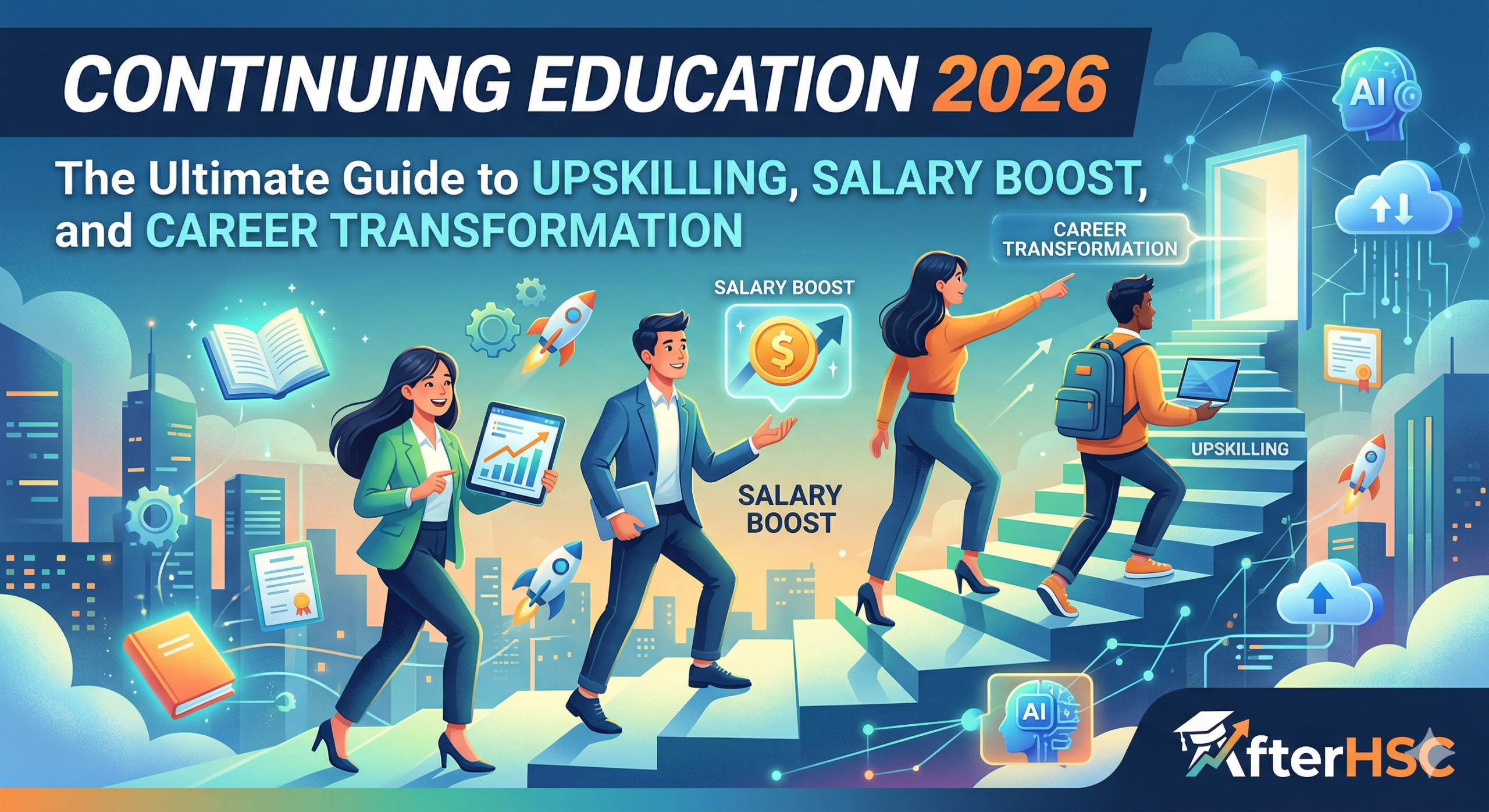
🎓 Introduction: Why Continuing Education is No Longer Optional
In 2026, the global job market is evolving faster than ever before. A traditional college degree, once considered the ultimate career passport, is no longer enough to guarantee long-term success. Employers today are not just looking for degrees—they are looking for skills, adaptability, and continuous growth. This is where continuing education (CE) becomes a game-changer.
Continuing education refers to any learning activity you pursue after completing your formal education, such as high school or a college degree. Unlike traditional degrees, CE focuses on practical skills, certifications, and industry-relevant knowledge that can be applied immediately in the workplace.
For international students and young professionals in the USA and Canada, education is not just an option—it is a necessity. Whether you want to secure a better job, increase your salary, switch careers, or maintain a professional license, CE provides the tools you need to stay competitive.
The most successful professionals today are lifelong learners. They continuously upgrade their skills, adapt to industry trends, and invest in their personal growth. In this guide, you will discover everything you need to know about continuing education in 2026, including types, benefits, high-paying industries, and strategies to maximize your return on investment.
📈 Why Continuing Education Matters in 2026
The modern economy is driven by technology, innovation, and rapid change. This means that skills can become outdated within just a few years.
🔍 Key Trends Driving education
1. AI and Automation
Artificial Intelligence is transforming industries across the globe. Jobs are not disappearing—but they are changing. Workers must learn new tools and technologies to remain relevant.
👉 Simple Line:
“If you don’t upgrade your skills, technology will replace your role.”
2. Remote Work Revolution
Remote and hybrid work models require new skills such as:
-
Digital communication
-
Project management tools
-
Self-discipline and productivity
3. Skills-Based Hiring
Companies are now hiring based on skills rather than degrees.
-
Certifications matter more than ever
-
Practical knowledge is highly valued
-
Experience + skills = higher salary
4. Global Competition
You are not just competing locally—you are competing globally. education helps you stand out in a crowded job market.
👉 Key Quote:
“A four-year degree gets you started. education keeps you growing.”
📚 Types of Continuing Education (Complete Breakdown)
Continuing education comes in many forms. Choosing the right one depends on your career goals.
🎯 Main Types:
1. Certificates
Short-term programs focused on specific skills.
-
Duration: 3–12 months
-
Best for: Job-ready skills
2. Diplomas
More detailed than certificates.
-
Duration: 1–2 years
-
Best for: Career change
3. Online Courses
Flexible and affordable learning.
-
Platforms: Coursera, edX, Udemy
-
Self-paced
4. Micro-Credentials
Short, skill-specific certifications.
👉 Example: Data analytics, digital marketing
5. Workshops & Seminars
Short-term training sessions.
-
Hands-on learning
-
Networking opportunities
6. Professional Development Units (PDUs)
Required for maintaining licenses.
📊 Comparison Table
| Type | Duration | Cost | Career Impact |
|---|---|---|---|
| Certificate | Short | Low | Medium |
| Diploma | Medium | Medium | High |
| Online Course | Flexible | Low | Medium |
| Micro-Credential | Short | Low | High |
💼 High CPC Industries That Demand Continuing Education
🏥 Healthcare
-
Nurses need Continuing Nursing Education (CNE)
-
Doctors require CME credits
👉 High salary growth
📊 Finance & Accounting
-
CPA, CFA certifications
-
Continuous skill updates
💻 Technology & Engineering
-
Cloud computing
-
AI & Data Science
👉 High Demand + High Salary
🎓 Education Sector
-
Teacher training
-
Professional development
👉 Key Insight:
“Industries that require continuous learning often offer the highest salaries.”
🌍 Continuing Education for International Students
International students face unique challenges, but also great opportunities.
Important Points:
-
Choose accredited programs
-
Check visa rules (OPT/CPT)
-
Look for affordable options
👉 Simple Advice:
“Start with short certifications, then move to advanced programs.”
🎯 How to Choose the Right Program
Checklist:
✔ Accreditation
✔ Cost vs benefit
✔ Job demand
✔ Flexibility
👉 Golden Rule:
“Choose skills that employers are actively hiring for.”
💰 Will continuing education Increase Salary?
Yes—if done correctly.
Examples:
-
Data analytics certificate → +15–25% salary
-
Cloud certification → +20–40% salary
-
Healthcare specialization → +30% salary
👉 Key Line:
“Continuing education is an investment with measurable returns.”
🧾 How to Get Employer Sponsorship
Many companies pay for employee education.
Strategy:
-
Show business benefit
-
Choose relevant course
-
Present ROI
👉 Quick Tip:
“Companies invest in employees who invest in themselves.”
🧠 Conclusion: Your Future Depends on Learning
Continuing education is no longer optional—it is essential. In 2026, success belongs to those who continuously learn, adapt, and grow.
Whether you are an international student, a fresh graduate, or a working professional, investing in continuing education can transform your career, increase your income, and secure your future.
📣 Call to Action
👉 Explore more career and finance guides on afterhsc.com
🚀 Start your journey toward success today!